
Finding Your Heading
The Field Review: TFR-092
THE LEDE
A Weekly Column On Living Well
I am a sucker for symbolism.
I like things that stand for other things. On my desk you’ll find a collection of junk that means absolutely nothing to anyone but me. Coins. Rocks. Bottle caps with good quotes. Basically just a bunch of pocket treasures that probably look like trash to anybody else.
But mixed in with all of it is a small brass compass from 1924us that made its way all the way from Tasmania to my little village in Ohio a few years back.
The compass itself as an object is cool. But what it represents matters more to me.

As a mid-rank Boy Scout on my way to earning Eagle, I had to cross the orienteering merit badge off my list to get there. During one of my summers at Buckskin Scout Reservation in the back hills of West Virginia, each of us had to prove we could navigate a course around the 600+ acre camp using only a map and compass. No phones. No real line of sight. Just paper and magnetic pull.

I’ve started a few side hustles over the years. Everything from t-shirt printing to small business consulting. Any time I need a quick brand identity, I’ve used a compass as a logo more than once.
I’ve always liked what a compass represents.
They provide direction without giving you the whole answer. A compass provides a heading, but stops short of delivering a guarantee. Just enough information to help you get moving without removing the requirement to think for yourself.
The compass has existed in some form for thousands of years. They helped get people across uncharted oceans, cut through wilderness, and find their way through the world when there wasn’t much else to go on.
In 2026, direction by itself feels pretty outdated.
We don’t just have access to maps. We have access to the answer before we even needed to ask the question. We have LLMs, AI-powered search engines, summaries, explainers, frameworks, prompts, and instant responses for just about anything we can think to ask.
Why spend time figuring out just a heading out when you can type a few words and get the full completed route back in a few seconds?
For curious people like myself, AI is the rabbit hole that never ends.
I have always had too many questions, which means I always find another trail to follow. One answer leads to five more questions. Five more questions lead to ten more tabs open in my brain.
If you’ve ever watched the Pirates of the Caribbean movies, you might remember Captain Jack Sparrow’s compass. It doesn’t point north. It points toward whatever the holder wants most in the world.
There’s a scene where Jack looks down and the compass is endlessly spinning, offering no direction at all.
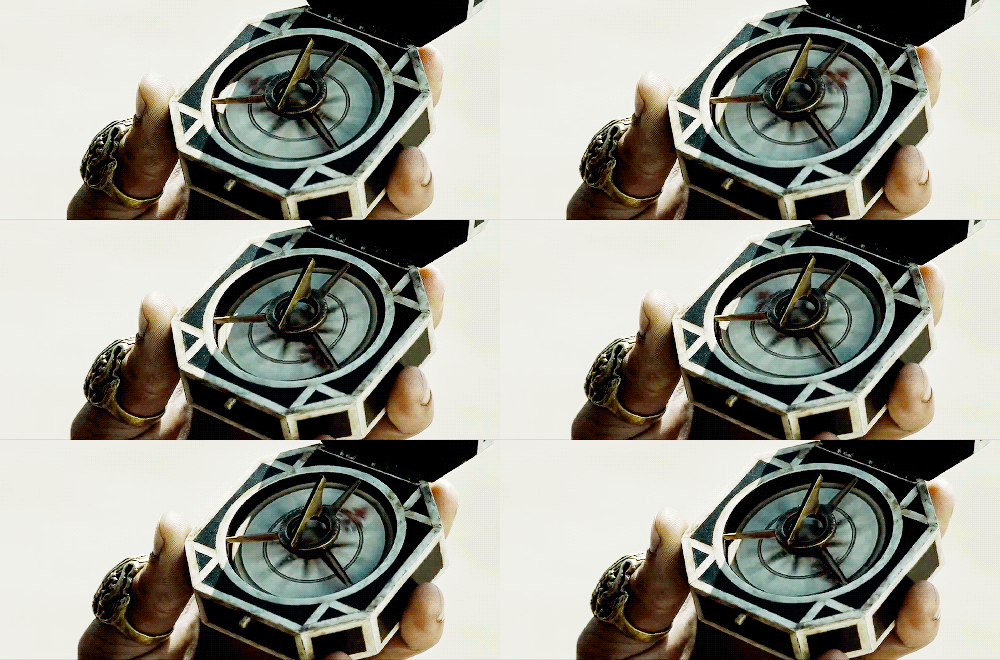
This the best example I can think of to represent my brain on AI.
Endless answers. Endless options. Endless inputs. Endless things to know, chase, optimize, compare, and consider. Enough information to make you feel informed with enough noise to keep you from taking any step in any direction.
Good or bad, this is exactly why I haven’t been able to fully lean into this new era of technology. The more information I have at my fingertips, the easier it becomes to keep searching instead of choosing. To keep refining instead of committing. To keep asking questions without ever actually moving.
A compass does not offer to solve the rest of your journey. It does not remove uncertainty. It does not walk the path for you. It simply gives you a heading and asks for you to take the next step.
Modern technology does the exact opposite. It offers so much information, so much completion, so much artificial certainty, that it becomes easy to mistake knowing for living.
I wish living well meant knowing all the answers. It’d make the whole “figuring it out” process a lot easier. I think in order to truly live well, you have to know your direction. To have a general idea of where you’re headed, or if you’re not headed in the right direction, to know where you want to go instead.
After all, headings change. If you get off track, your heading to get back won’t be the same one you took to get lost. And sometimes, you just need a heading for today. Forget about the five-year or ten-year journey.
What direction do you need to go in, TODAY?
Modern technology can give you answers. It can give you plans, summaries, shortcuts, and second drafts. But it cannot give you the gut feeling you get when you know you’re on the right path.
At some point, you have to be the one to choose a heading. To determine just enough direction to make it through today and put yourself in a good spot for the journey tomorrow.
Live Well. Tell No One.
THE MARGIN
A Few Things That Grabbed My Attention This Week
Donnie Vincent’s The Way Back
I get pretty tired of the standard hunting film formula:
“I’m a hunter > there’s a thing I want to hunt > let’s go hunt it”
Donnie Vincent’s The Way Back has actual layers to it. The film follows Donnie back to the Alaskan wilderness that helped shape him. He talks about what brought him to Alaska in the first place, the memories tied to it, the chilhood dreams, and the way life looks different now than it did then. The stories about his father and the time they spent together in Alaska got me thinking pretty hard about my own place as a son, and now as a father to a son of my own.

The average new hire is 42 years old
According to a Washington Post report, the average age of workers starting new jobs in 2025 was 42 years old, up from 40.5 in 2022 and 40 in 2016.
I feel like I keep getting beat over the head with statistics about how upside down the American job market is.
I’m not saying you can’t switch jobs at 42. Of course you can. More power to you. What I am saying is that older generations have spent years complaining that younger workers have no loyalty or are lazier, meanwhile 30,000 Oracle employees just found out that their positions were eliminated via email as the company ramps up investment in AI infrastructure.
Wild times.
Flatland Cavalry - Landslide (Live from The Tetons)
Nothing here but a good song in a beautiful place.
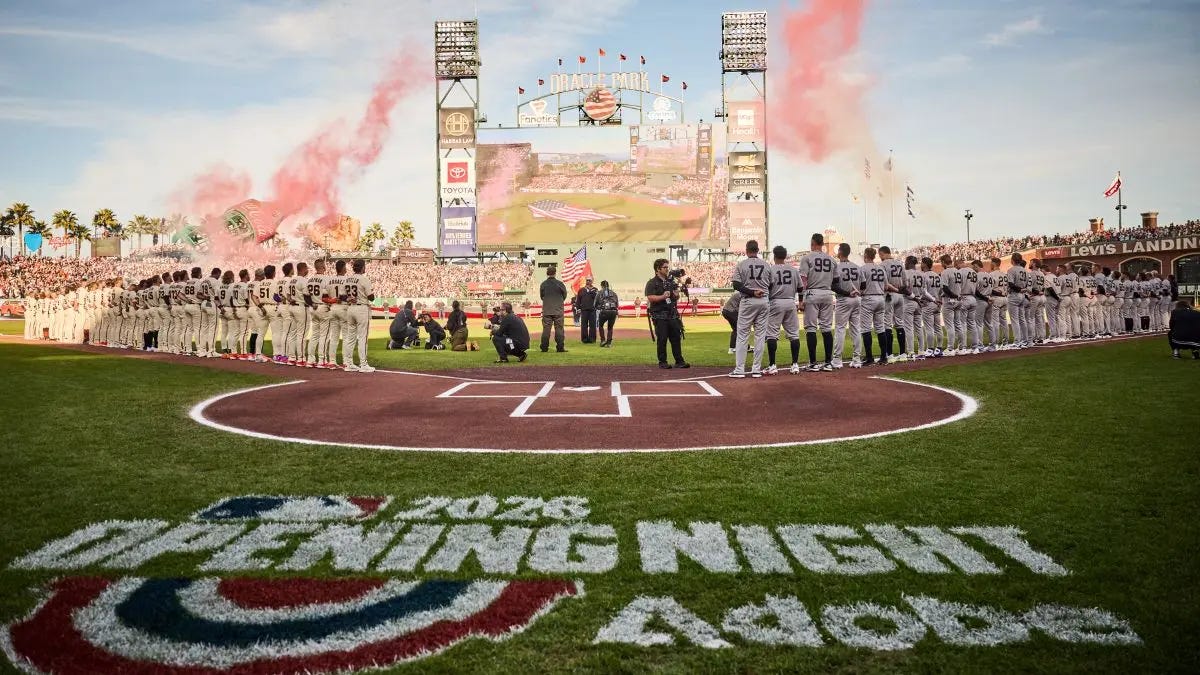
Is baseball making a cultural comeback?
The Athletic took a swing at answering the question of who really owns the No. 2 spot in American sports behind the NFL: the MLB or the NBA?
A lot of the numbers suggest the NBA has the cultural edge, or at least a louder one. But using myself as a barometer, baseball feels like it’s creeping back into relevance in a way I haven’t felt in years. My grandfather pre-determined my sporting team allegiances, so I am, by default, a Cleveland Indians fan. However, I’ve spent the majority of my life not caring much about watching or listening to a game. But between last season’s postseason run and a strong start this year, I’ve consumed more baseball in the last six months than I have in the last twenty years.
Baseball could be the move.
The Man You Walk With
Ted Scott has been on the bag for four Masters wins, two with Bubba Watson and two with Scottie Scheffler. He is undoubtedly one of the best caddies in the history of golf, but even so, he’s much more interested in being a good man than a successful one on the course.
The Man You Walk With from Golf.com follows Ted through his home state of Louisiana shifting the focus away from trophies and toward the parts of his life he cares about more… faith, family and community.
STANDARDS
Concepts & Vibes For Your Consideration


The Field Review is a weekly newsletter exploring the art of living well.
Every Sunday at 10AM EST, I share ideas, insights, and conversations that help break through the noise, offering a real look at how we can all keep moving forward.
Venture Onward,
Jack
Would love to hear more from you, the reader. What’s on your mind, where you’re headed, what you want to see next from me, the writer. Drop a comment below.
A very interesting juxtaposition. I, too, am overwhelmed by this abundance of choice, and it offers virtually no relief. I don't think I'm alone.