
Everything I've Learned From Publishing 100 Times on Substack
The Field Review: TFR-100
THE LEDE
A Weekly Column On Living Well
When I first started writing The Field Review in the spring of 2024, I had no set plans and no real purpose beyond collecting my thoughts somewhere that wasn’t in the margin of a work notebook or the notes app on my phone.
I first started on Beehiiv. Just a few issues and a few weeks later, I moved everything over to Substack because I had already subscribed to a few writers here and wanted a more consistent reading + writing ecosystem.
Unlike some of the Substack growth hackers you’ll find around here who brought tens of thousands of emails with them, I started with zero subscribers. Sure, I told a few friends and family members I was starting a newsletter, but that imported list was less than ten people.
Now one hundred issues and a thousand subscribers later, I’ve learned a lot about what comes with publishing your thoughts on the internet.
Whether you’re a writer, a reader, or someone who has been quietly talking yourself into starting something of your own, here are ten things I’ve learned from hitting publish the publish button one hundred times.
1. Build in public
When I first started The Field Review, this plane didn’t even have wings.
I had no audience, no format, no real thesis, and very little idea of what I was trying to do. Early on I wrote about business trends, workplace culture, personal development, random observations, and a lot of other things I thought a newsletter was supposed to include.
Some of them were fine. A lot of them were forgettable. Looking back, most of those early issues feel like they were written by someone still trying to find their voice, purpose and format. Probably because that’s exactly who wrote them.
It took more than a year to land on the format you’re used to now: The Lede, The Margin, and Standards. That wasn’t part of a pre-baked master plan. It came from trying things, realizing most of them weren’t quite right, and keeping the pieces that felt strong.
I once heard Craig Francis talk about the power of building in public, and I think that’s the best way to describe what this journey has been. I continued to build The Field Review while people were reading it instead of keeping things hidden in the shadows aiming for secret perfection. If you’ve been a longtime subscriber you’ve had a front row seat to this evolution. Whether or not you’ve even noticed the changes along the way is a different question I’m not entirely sure I need to know the answer to.
Starting with no one helped as there wasn’t much to protect, no audience to disappoint and no expectations to manage. Just a blank page and a weekly deadline I imposed upon myself.
From the jump, I debated writing under an alias because I didn’t know if I wanted people I knew in real life to find this side project. Now two years in, I’m happy I made the decision to write under my real name because not wearing a mask on the internet is a superpower.
My thoughts are mine. My name is attached to them. I stand behind what I publish, even when I look back and think I could have said it better.
I’m a real person with real ideas. Google me.
2. Have a point of view
For the first handful of issues, I didn’t really have any strong perspective.
I had opinions, sure. Everyone has opinions. But a point of view is different. A point of view has a spine. It carries a little risk. It gives a reader a reason to come back because they can feel that there is a person behind the words, not just someone aggregating thoughts from the internet (or from AI) and sending them back out a little duller than they found them.
I didn’t have a voice because I didn’t know what I was doing. I was also still worried someone I knew in real life might find this secret side project and ask why I was writing about flow states and office dynamics on the internet.
Eventually I stopped caring as much.
You’ll find a lot of people here writing about the same broad categories. Business. Culture. Life. Work. Ambition. Family. The outdoors. None of those topics are rare.
The difference is whether you’re writing from real experience, or just writing to meet the needs of what you think people want to read.
3. Be niche, but not too niche
I don’t know the exact interest breakdown of my subscriber list, but I imagine it’s a pretty broad spectrum.
Some of you are probably here for hunting. Some of you are here for lifestyle. Some of you are here for the living well stuff. Some of you might enjoy the occasional rant about the never-ending dumpster fire that is Cleveland sports.
I know that every issue I write will not satisfy every person every week. That’s fine.
But I like having range because I think people should have range. I don’t want to be one thing all the time. Most interesting people aren’t.
A person can care deeply about deer season and still have a perspective on the corporate workplace. A person can love golf while also wrestle with ambition, fatherhood and contemplate the ethics of fair chase. A person can pursue a good pocket knife, a better morning routine, a cleaner garage, a full freezer, a stronger marriage, and a life that feels a little more intentional across all aspects without having to put themselves into just one of those labeled boxes.
The topic may change. The way of seeing the world remains the same.
4. Find your people
I didn’t expect to meet so many cool people on this app. But through Substack I’ve encountered a group of internet acquaintances that I would have never crossed paths with otherwise.
On Fridays, I get updates on radical living from Lou Tamposi. Jeff Lund is the first Alaskan this Ohioan has ever known. I get my style and gear updates from John Thompson. I turn to Mike Idell, Foster Huntington, and RILEY HARPER for strong perspectives on the cultures I care about.
There are plenty of other writers here I genuinely look forward to keeping up with, despite knowing there is a slim chance we ever meet in person. I encourage you to check out my recommendations list for other writers you should subscribe to if you’re not already.
The internet is mostly terrible until it isn’t. Every now and then, it still works the way it was probably supposed to. You find people with shared interests, different lives, and unique perspectives to keep paying attention to.
5. Progress over perfection
I’m not a perfectionist by nature, which has probably helped me here. I’m willing to send something that feels strong even if it still has a few loose boards.
I have enough faith that readers of The Field Review have enough mental capacity to understand what I’m saying even if I don’t spell it out word-for-word. No hand-holding required.
There is a point where polishing becomes hiding. You keep editing because editing feels safer than publishing. You keep adjusting the sentence because the sentence can’t be judged while it’s still sitting in drafts.
I’m a firm believer that a half-baked good idea is often better than a fully-baked dead one. The work has to leave your hands eventually, don’t be afraid to ship it out even it might not be 100% perfect.
Nothing ever is.
6. Write on experience, not on topics
The issues I like the least are usually the ones where I went hunting for a topical idea. The issues I like the most are the ones that were already sitting in front of me.
The good stuff usually doesn’t show up as lightning strike. More often, it shows up as a moment that felt bigger than it should have. A good morning in the woods. A bad morning in the woods. A frustrating week at work. A conversation. A fatherhood milestone.
The good ideas are already happening in front me. I just have to notice them before they slip by.
Some weeks I forget that and start trying too hard. I’ll read a few posts, check a few headlines, poke around until I can convince myself I’ve found a topic. Those issues almost always feel thinner than the ones that came from a real moment in my actual life.
That might be the most practical writing advice I can give. Live your life. Pay attention. Write down the ideas, problems and memories won’t leave you alone.
7. The numbers matter less than you think
I’d be lying if I said I don’t check the numbers. Subscribers. Opens. Likes. Comments. Restacks. The little scoreboards behind the curtain.
Some weeks the numbers make me feel like I’m onto something. Other weeks they make me wonder if I’m the only person on the planet who understood that week’s issue.
For the record, my favorite issues of The Field Review are not the ones that had the best numbers. But that’s part of the deal.
I want The Field Review to grow. I’m not going to pretend otherwise. But if the numbers become the reason I write, the writing will get worse.
That’s a bad trade.
8. Keep going
I believe that consistency is the only reason this thing made it to one hundred issues.
There was no major growth hack. No secret distribution or conversion strategy. No viral moment that changed everything overnight. Just Sundays. One after another.
At this point, publishing every week has become a mental game I play with myself. I don’t want to miss. I don’t want to break the streak. That might sound stupid, but it works.
There have been plenty of weeks where I didn’t feel like writing. Weeks where work was heavy, life was busy, the idea was foggy, or sleeping in sounded a hell of a lot better than opening my laptop and trying to flush out an idea. But week by week, the rhythm started to matter. The act of showing up became part of the point.
That’s what consistency does. It removes some of the negotiation. I no longer have to wake up every week and decide whether I’m the kind of person who writes. The decision has already been made. Now I just have to keep the appointment.
Now… consistency does not make the work automatically good. Plenty of consistent things are bad. But consistency gives the work a chance to become something. It gives your voice time to sharpen. It gives your ideas time to repeat, evolve, and eventually get better.
The advice I got in the beginning was right. Just keep going.
9. There will be critics
A few weeks ago, I wrote what was probably my most negative issue ever published, Spectator Behavior. I wrote it in a pissed off mood because I was tired of my thesis, Live Well. Tell No One., being torn apart by people who didn’t take the time to understand what it meant.
That’s on me to some degree. Even I can recognize that it’s a somewhat controversial line published on the open forum of the internet. People can react however they want.
After two years of writing online, I now know that many people live to “shitpost.” Some people want to rage bait other people they don’t know. They sit behind a screen name and scroll around looking for something to hate on because criticism gives them a cheap sense of authority.
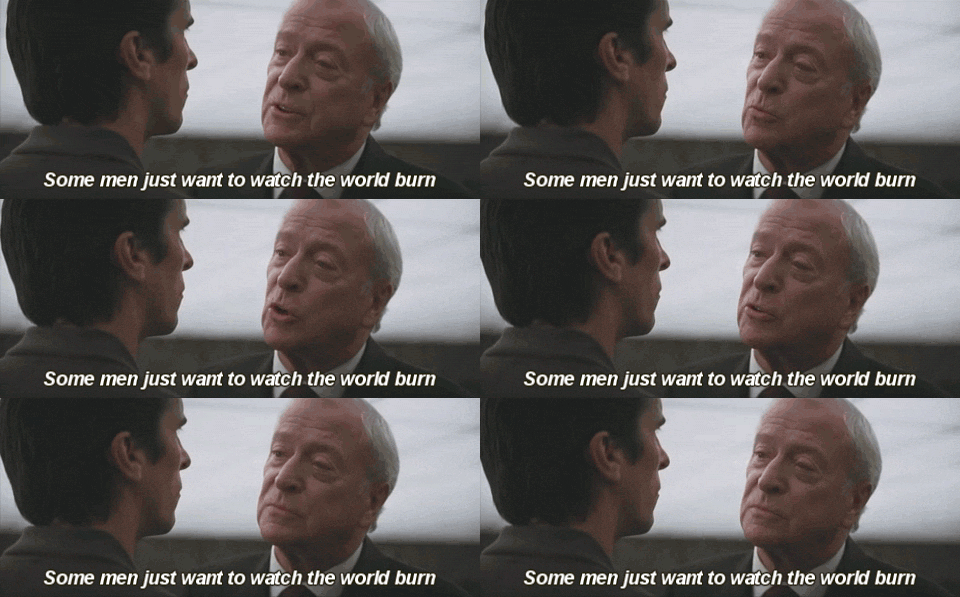
As Alfred says, “some men aren’t looking for anything logical... they can’t be bought, bullied, reasoned, or negotiated with. They simply want to watch the world burn.”
You will eventually encounter these people if you keep putting your work into the world.
Don’t take it personally. Keep walking. Keep writing.
10. Don’t just write it, live it
The longer you write online, the easier it becomes to turn your life into material. Every thought becomes a possible note. Every moment becomes a possible issue. Every frustration becomes a paragraph.
That can be useful. It can also get gross fast.
Writing The Field Review can’t become the whole point. The point is to be in it. To work. To hunt. To golf. To be a husband. To be a father. To keep learning. To keep paying attention. To keep doing the things that make the writing possible in the first place.
Live Well. Tell No One. was never supposed to be a content strategy.
It’s a reminder to live well first. To tell the story when it’s worth telling. And to keep the rest for myself.
--
So here we are, now one hundred issues in, and I still don’t know exactly what The Field Review is supposed to become. Maybe that’s why I keep coming back. There’s still room to figure it out.
What I do know is that writing this every week has made me pay closer attention to my own life. It has made me more honest about what I value. It has given shape to ideas I might have otherwise ignored. It has introduced me to people I otherwise would have never met. It has given me a reason to keep asking what it means to live well in a world that keeps trying to make everything louder, faster, easier, and emptier.
To anyone who has read one issue, ten issues, or all one hundred, thank you.
Thank you for giving me a little piece of your day. Thank you for reading the long ones, the strange ones, the hunting ones, the overly serious ones, and the ones that probably should have stayed in drafts. Thank you for trusting me with your hard-earned, valuable time and attention. I promise you, it does not and will never go unnoticed.
The advice I received in the beginning was right. Keep going.
So I will.
Live Well. Tell No One.
THE MARGIN
A Few Things That Grabbed My Attention This Week
Jack Nicklaus on the origins of Muirfield Village and the Memorial Tournament
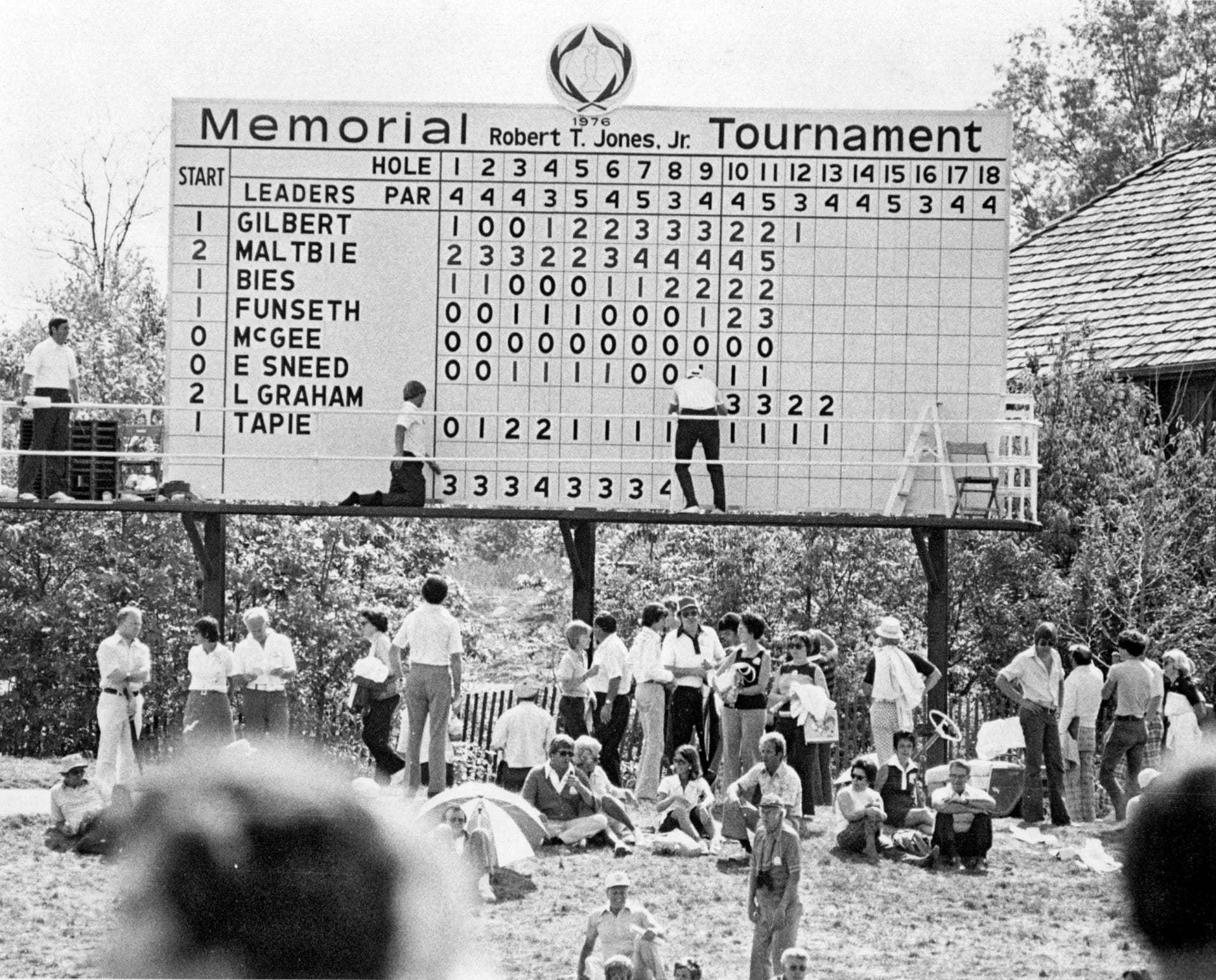
This weekend is the Memorial Tournament here in my home city of Columbus (technically Dublin), Ohio, founded and hosted by the unquestionable GOAT of golf, Jack Nicklaus. This year carries a little more weight because it marks the tournament’s 50th anniversary.
Jack’s interview from earlier this week gets back to the origin story of not just the tournament as a date on the PGA calendar, but the early vision for the course, the work of building it, and the legacy it now carries after half a century.
Rich Eisen’s This Was SportsCenter with Dan Patrick
Despite him being a Michigan-Man (gross, Go Bucks!), I have been a longtime listener of the Rich Eisen Show as part of my sports media circuit. Eisen was one of the ESPN OGs as a host of Sportscenter through the late nineties into the early 2000s. In this first episode of his new project “This Was Sportscenter”, he brings in another OG, Dan Patrick, to look back on his years at ESPN helping to turn SportsCenter from a highlights show into a foundational pillar of sports culture.
As a marketer by trade, I loved the behind the scenes look into the history of some of the most iconic creative work ESPN ever produced, especially the original ‘This Is SportsCenter’ commercial spots. Those ads are some of the best examples of sports marketing done right.
STANDARDS
Concepts & Vibes For Your Consideration

The Field Review is a weekly newsletter exploring the art of living well.
Every Sunday at 10AM EST, I share ideas, insights, and conversations that help break through the noise, offering a real look at how we can all keep moving forward.
Venture Onward,
Jack
Would love to hear more from you, the reader. What’s on your mind, where you’re headed, what you want to see next from me, the writer. Drop a comment below.
Thanks! - I always tell myself, 100 likes on substack is worth 100,000 likes on instagram.
Heck ya, brother — here’s to 100 more! Honored to be mentioned alongside such other great writers.